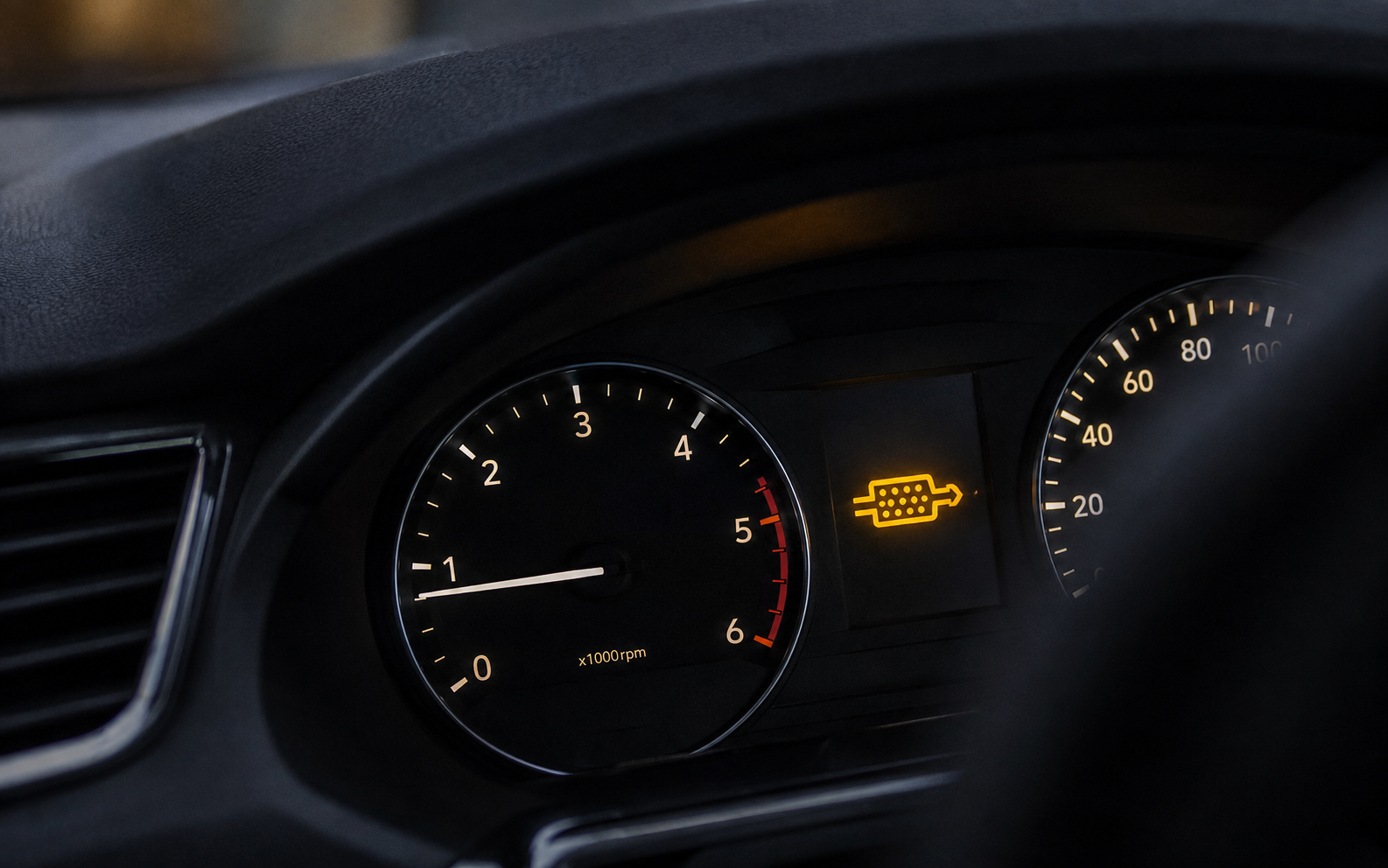
Get Rid of Dashboard Warning Lights and Low Power
Diesel engines come with systems like DPF (Diesel Particulate Filter), EGR (Exhaust Gas Recirculation), CAT (Catalytic Converter), and AdBlue/NOx to reduce emissions. While helpful, these systems can fail over time causing costly repairs, engine warning lights, limp mode, and poor performance which can cause damage to your engine.
At Fast Road Tuning we can help. We will update the software to remove the warning lights, limp mode and restore performance which makes your car run smoother, more efficiently and avoid costly repairs.
Best part is, our team will come to you making the process very easy.

DPF DELETE EXPERTS
With 8+ years of hands-on experience, we deliver top-quality upgrades you can trust.

WE COME TO YOU – ANYTIME, ANYWHERE
Mobile DPF delete service with engineers straight to your door. ZERO call-out charges.

#1 IN THE INDUSTRY
We use advanced software and industry-leading tools to tackle jobs other companies can’t handle.

TRUSTED BY THOUSANDS OF DRIVERS
More than 4,000 cars powered by our software

How does DPF delete work?
A DPF delete removes the Diesel Particulate Filter (DPF) from the exhaust system, allowing exhaust gases to flow freely without being filtered. This can be done in the following ways:
1. Hardware (Physical) DPF Delete
- The DPF filter is physically removed or hollowed out from the exhaust system.
- A straight pipe or modified section of the exhaust replaces the filter.
- This allows exhaust gases to flow more freely, reducing backpressure.
2. Software (Electronic) DPF Delete
- The car’s ECU (Engine Control Unit) is reprogrammed to disable the DPF system.
- The regeneration process (which normally burns off soot buildup) is turned off.
- The ECU no longer detects a missing or faulty DPF preventing warning lights and limp mode.
What Happens After a DPF Delete?
- Engine performance will improve , since the restriction is removed.
- Less soot buildup, reducing the chances of clogging inside the engine.
- No more warning lights
Options for Managing DPF Issues Without a Delete
DPF Regeneration – Take your vehicle for a long drive at higher RPMs (we recommend 3,000) to burn off soot buildup.
DPF Cleaning – Remove the DPF filter and use a professional DPF cleaning machine (NOT CARBON CLEANING).
Chemical DPF Cleaners – Add a DPF cleaner to your fuel to help break down and remove carbon deposits during normal driving.
DPF Replacement – If the filter is damaged or too clogged to clean, replacing the DPF with a new one can restore proper function.
Engine Diagnostics and Repairs – Address any underlying engine issues, like faulty sensors or injectors, that may be causing excessive soot production.
DPF Delete FAQ’s
Find answers to the most frequent questions about DPF removal. Have any questions? Contact Us


